
 Croatia
Croatian Law on Foreigners 2026: Key Changes for Employers and Foreign Workers
Work Abroad News
16/05/2026 4:44 AM
2 views
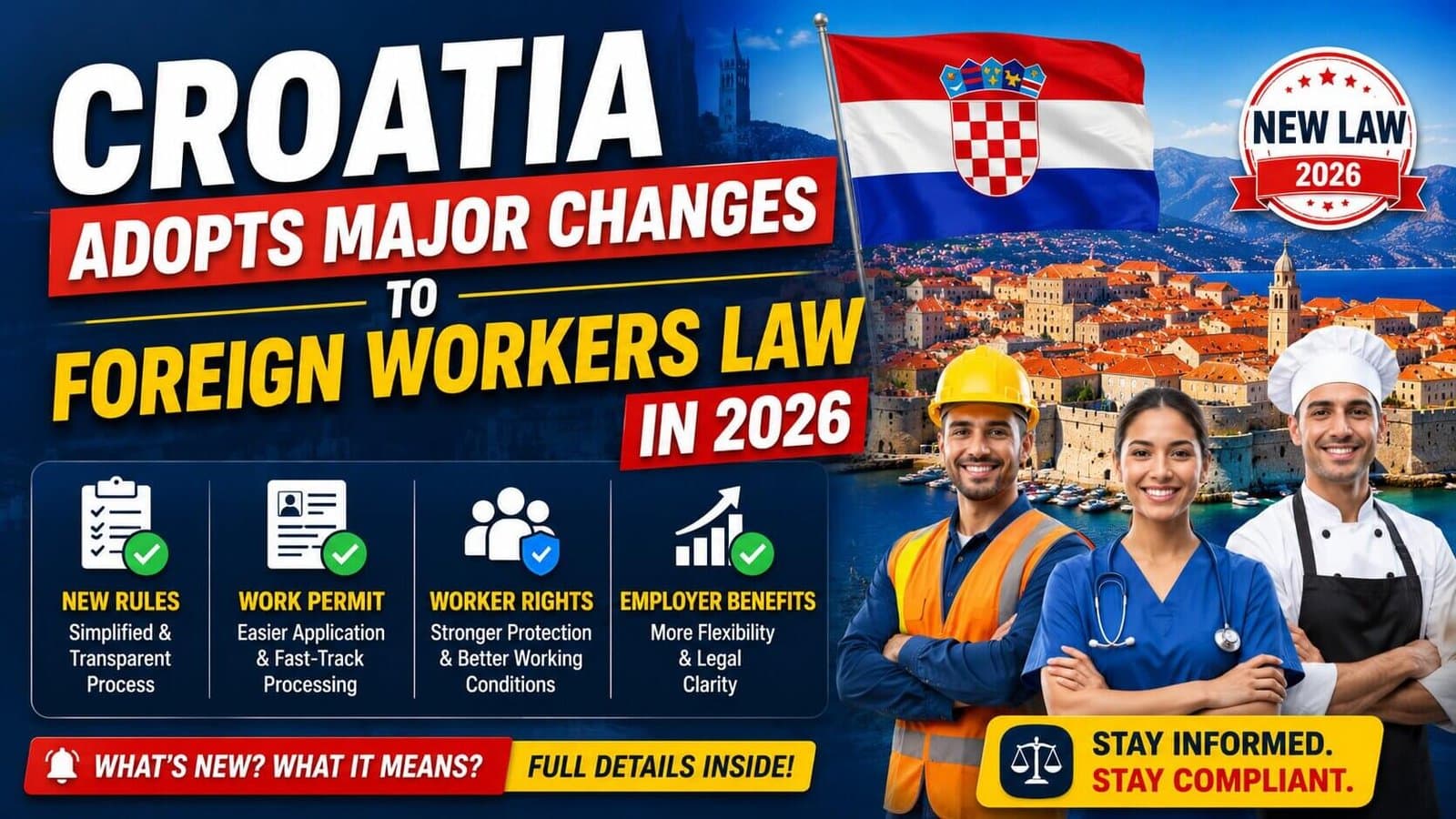
Croatian Law on Foreigners 2026 introduces significant updates that affect employers, foreign workers, recruitment agencies, and businesses operating across Croatia. The legislative changes are designed to improve labour market oversight, strengthen worker protections, simplify certain administrative procedures, and ensure employers meet higher compliance standards when hiring non-EU nationals.
As Croatia continues to experience labour shortages in industries such as construction, tourism, hospitality, transportation, manufacturing, healthcare, and agriculture, foreign workers remain essential to supporting economic growth. The updated legislation aims to balance employer needs with stronger safeguards for employees while improving transparency throughout the work permit process.
Whether you are an employer planning to hire international talent or a foreign national seeking employment in Croatia, understanding the latest legal framework is essential. This guide explains the most important changes introduced under the Croatian Law on Foreigners 2026 and what they mean in practice.
Why Croatia Updated the Foreigners Act
Croatia has experienced increasing demand for qualified workers across multiple industries over the last several years. Many businesses have struggled to recruit enough local employees, making international recruitment an important part of workforce planning. At the same time, government authorities have sought to strengthen oversight of employers participating in the work permit system. The 2026 amendments introduce additional employer responsibilities while improving protections for foreign workers employed in Croatia. The updated legislation also supports better cooperation between employers, government institutions, and labour inspectors to reduce abuse and improve compliance with Croatian employment laws.Main Objectives of the Croatian Law on Foreigners 2026
The amendments pursue several important goals that benefit both employers and foreign workers.- Improve transparency throughout the work permit process.
- Strengthen labour market oversight.
- Increase employer accountability.
- Provide greater legal protection for foreign workers.
- Reduce administrative abuse.
- Support Croatia's growing labour market needs.
- Modernize immigration procedures.
Work Permit Rules Under Croatian Law on Foreigners 2026
One of the most significant aspects of the updated legislation concerns work permits. Employers hiring third-country nationals must continue to obtain the appropriate work authorization before employment begins unless an exemption applies. The new legal framework places additional emphasis on verifying employment conditions, documenting recruitment activities, and ensuring employment contracts accurately reflect the position offered during the application process. Government authorities may request additional documentation during the review process to verify that legal requirements have been satisfied.Employer Responsibilities Continue Throughout Employment
Receiving a work permit approval is only one step in the compliance process. Employers remain responsible for meeting all legal obligations throughout the worker's employment. This includes paying agreed wages, providing working conditions consistent with the employment contract, maintaining employment records, and ensuring workplace safety standards comply with Croatian labour legislation. Failure to meet these responsibilities may result in administrative measures, financial penalties, or restrictions affecting future employment applications.Greater Protection for Foreign Workers
The Croatian Law on Foreigners 2026 introduces measures intended to improve protection for foreign employees working in Croatia. These provisions encourage fair treatment, transparent employment conditions, and greater accountability for employers participating in international recruitment. Foreign workers should receive employment contracts that clearly define wages, working hours, job responsibilities, and employment conditions before beginning work. Authorities also continue strengthening inspection activities to ensure employers comply with applicable labour standards throughout the employment relationship.Changes That Affect Employers
Businesses employing foreign nationals should carefully review their internal hiring procedures. Compliance requirements extend beyond submitting work permit applications and include ongoing documentation and employment monitoring. Employers are encouraged to establish internal compliance procedures that help verify employment records remain accurate and current.- Maintain complete employee documentation.
- Keep payroll records up to date.
- Review employment contracts regularly.
- Document recruitment activities.
- Ensure accommodation arrangements comply with legal standards where applicable.
- Monitor permit validity dates.
- Maintain communication with government authorities when employment circumstances change.
How the New Rules Support Croatia's Labour Market
The Croatian economy continues to rely on international recruitment across numerous sectors. The updated legislation aims to create a more balanced employment system by protecting workers while giving employers access to skilled labour when domestic recruitment cannot fully satisfy demand. Modernized procedures also help improve confidence in Croatia's immigration system while encouraging responsible hiring practices across all industries.Industries Most Affected
Although the legislation applies broadly, several industries are expected to experience the greatest operational impact because they employ larger numbers of foreign workers.- Construction
- Hospitality
- Tourism
- Manufacturing
- Transportation
- Agriculture
- Healthcare
- Food processing
Best Practices for Employers
Organizations can improve compliance and reduce administrative risks by implementing structured employment procedures.- Create a compliance checklist for every foreign employee.
- Monitor permit expiration dates.
- Retain payroll and attendance records.
- Document any changes in employment conditions.
- Ensure salaries meet contractual and legal obligations.
- Provide safe and lawful working conditions.
- Inform relevant authorities when required by law.
- Review immigration legislation regularly.
Benefits for Foreign Workers
The Croatian Law on Foreigners 2026 aims to improve legal certainty for foreign nationals by strengthening transparency throughout the employment process. Clearer employment documentation and stronger employer responsibilities contribute to better protection of workers' rights. Foreign workers should carefully review their employment agreements before signing and keep copies of all important documents, including permits, contracts, salary records, and official correspondence. If employment circumstances change, workers should seek guidance from their employer or the competent Croatian authorities to ensure they continue meeting legal requirements.How Businesses Can Prepare for Future Changes
Immigration and employment legislation continues to evolve in response to labour market conditions. Employers should establish ongoing compliance programs rather than relying on one-time reviews when hiring foreign workers. Working closely with experienced HR professionals, legal advisers, or immigration specialists can help businesses remain informed about future legislative developments and administrative requirements.Frequently Asked Questions
What is the Croatian Law on Foreigners 2026?
The Croatian Law on Foreigners 2026 is the updated legal framework governing the entry, residence, and employment of foreign nationals in Croatia. It introduces changes affecting employers, work permits, worker protections, and compliance obligations.Who is affected by the new law?
The legislation affects employers hiring third-country nationals, foreign workers, recruitment agencies, HR professionals, and organizations involved in international recruitment.Do employers have additional responsibilities?
Yes. Employers are expected to maintain accurate employment records, comply with labour legislation, meet permit conditions, and continue fulfilling their obligations throughout the worker's employment.Does the law apply to EU citizens?
Most provisions relating to work permits primarily concern third-country nationals. Citizens of European Union and European Economic Area member states generally continue to benefit from freedom of movement rules, subject to applicable Croatian regulations.Useful Official Resources
For the latest legal information and official guidance, consult the following resources:- Ministry of the Interior of the Republic of Croatia (MUP)
- Narodne Novine – Official Gazette of the Republic of Croatia
- Government of the Republic of Croatia
Related Articles
- Complete Croatia Work Permit Guide
- Temporary Residence in Croatia
- How to Hire Foreign Workers in Croatia